Argentine ant perimeter mitigation in Los Angeles targets the massive subterranean network of Linepithema humile , an invasive species dominating Southern California through single, interconnected supercolonies…
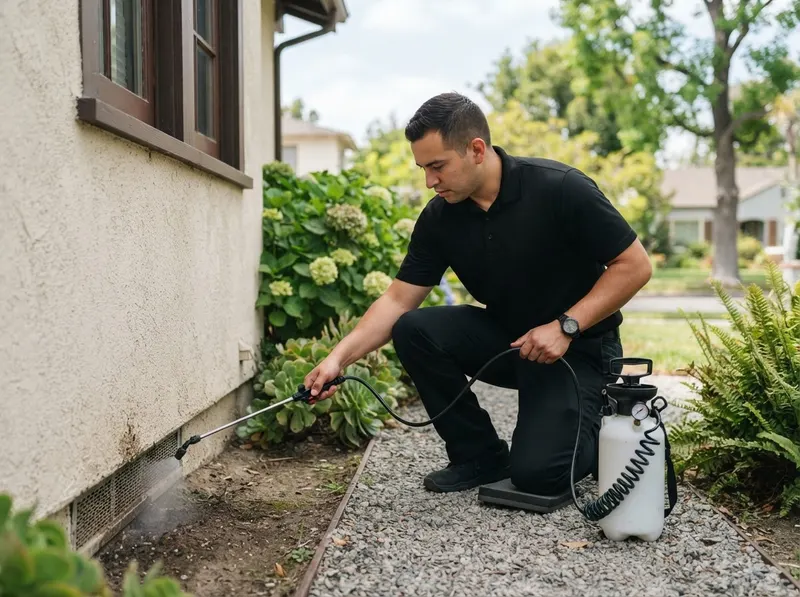
Argentine ant perimeter mitigation in Los Angeles targets the massive subterranean network of Linepithema humile, an invasive species dominating Southern California through single, interconnected supercolonies containing millions of reproductive queens. When high summer temperatures desiccate surface soils or winter rain inundates exterior nesting sites, worker ants travel along subterranean expansion cracks, subterranean utility lines, and structural foundation stems to access indoor plumbing moisture. Standard pyrethroid broadcast spraying causes structural colony budding, prompting a single colony to fracture into multiple independent reproductive sub-units inside subflooring and drywall. Effective perimeter mitigation relies on non-repellent liquid transfer chemistry paired with mechanical barrier exclusion, preventing interior contamination without triggering defensive nest dispersion.
Structural terrain across Los Angeles directly influences foraging vectors. In hillside settings like Los Feliz, Silver Lake, and Pacific Palisades, tiered retaining walls, decomposed granite terraces, and mature coast live oak canopies function as structural superhighways bridging straight onto cedar shingles and fascia board edges. In densely settled alluvial basins such as Koreatown, Boyle Heights, and Venice, unsealed concrete slab penetrations, moisture pooling beneath stucco weep screeds, and plumbing sleeves through slab-on-grade construction provide direct entryways. Properties bordering regional parklands, including Elysian Park and the hills surrounding the Sepulveda Basin Recreation Area in Encino and Sherman Oaks, experience acute foraging waves when outdoor aphid populations drop, shifting worker ants from honeydew resources straight toward domestic kitchen surfaces. Mitigation requires physical clearance of perimeter vegetation to a baseline distance of 12 inches from stucco walls, eliminating arboreal transit points as recognized by structural standards from the National Pest Management Association.
Establishing a durable perimeter barrier requires adhering to calibrated chemical concentrations governed by the California Department of Pesticide Regulation, which strictly regulates urban surface-water runoff to protect coastal watersheds via the Los Angeles Regional Water Quality Control Board. Certified technicians apply micro-encapsulated formulations containing fipronil along foundation perimeters, band-spraying 1 foot up the structural wall and 1 foot out across bare soil or hardscaping, never exceeding label-mandated seasonal crack-and-crevice limits. Technicians deploy targeted gel bait matrices containing low-dose borates formulated according to U.S. Environmental Protection Agency safety benchmarks, allowing workers to carry active ingredients into the central nest to sterilize queens. Physical containment finishes with applying elastomeric copper wire mesh and silicone polymer sealants around exterior gas pipes, sill plate joints, and air conditioner line sets in accordance with structural barrier guidance from the California Structural Pest Control Board.
Implementing Argentine ant perimeter mitigation early prevents the costly insulation replacement and interior sheetrock dismantling caused when mature colonies establish sub-slab nesting sites. When an infestation is confined to building perimeters, exterior treatments isolate worker pathways entirely outside living quarters, preserving indoor air quality and eliminating the need for interior chemical dispersal. CopperLine Pest Services records every structural fissure, utility sleeve breach, and irrigation moisture issue in an archived digital photographic report. Homeowners can verify their property envelope line integrity by reviewing local structural compliance standards with the Los Angeles Department of Building and Safety and regional vector surveillance metrics maintained by the Greater Los Angeles County Vector Control District.
Every job gets a firm, written price after a free on-site visit.
For standards, safe disposal, and service guidance on pest control services in Los Angeles, CA, useful references include U.S. EPA, ENERGY STAR, U.S. Dept. of Energy, Consumer.gov, U.S. Census Bureau, and Google Maps. General consumer and small-business resources are available from USA.gov, Better Business Bureau, FTC Consumer Advice, U.S. Small Business Administration, and Ready.gov.
Tell us about your argentine ant perimeter mitigation job in Los Angeles and we'll send a clear, written quote, usually the same day.
 CopperLine Pest Services