Drywood termite localized treatment in Los Angeles, CA isolates specific infestation zones within load-bearing members, structural fascia, and framing studs. In coastal climates like Pacific Palisades and Venice, high…
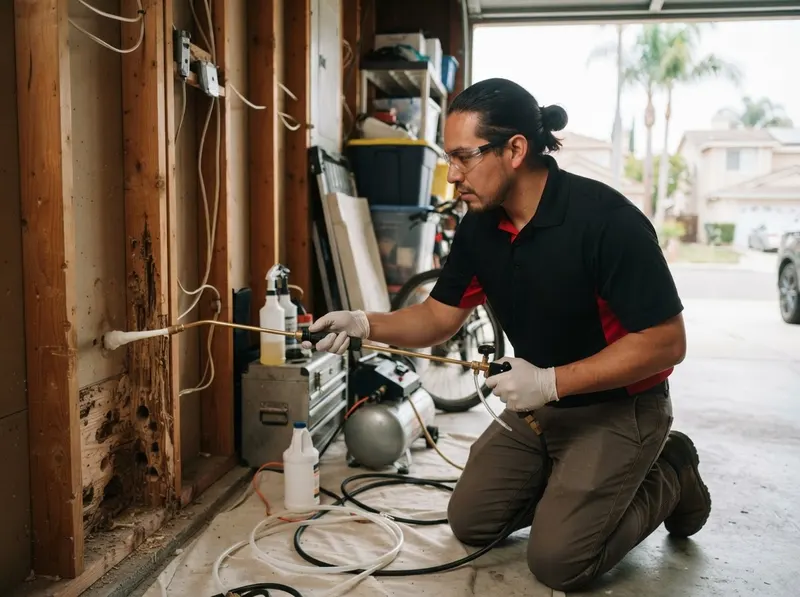
Drywood termite localized treatment in Los Angeles, CA isolates specific infestation zones within load-bearing members, structural fascia, and framing studs. In coastal climates like Pacific Palisades and Venice, high marine layer humidity accelerates exterior fascia decay, drawing alates into exposed rafter tails. Further inland along the Foothill terrain of Sherman Oaks and Encino, high summer heat accelerates drywood swarming cycles. Technicians inspect wood framing across interior crown moldings, exposed attic rafters, and hardwood sill plates, bypassing unnecessary whole-home displacement. Verification standards adhere to the California Structural Pest Control Board operational rules, identifying specific frass drop patterns and distinctive hexagonal pellets to isolate active galleries from dormant damage.
Local spot remediation serves as an architectural alternative when termite breaches remain confined to identifiable wood zones. If a single timber beam in a Los Angeles historical craftsman home in Los Feliz or Highland Park shows isolated kick-out holes, direct drill-and-inject methods introduce non-repellent transfer agents or borate salts directly into the gallery matrix. Structural containment relies on products registered under EPA pesticide regulations, utilizing specialized formulations like Nisus Corporation Bora-Care to achieve permanent wood penetration without airborne off-gassing. For properties adjacent to major native vegetation corridors like Griffith Park or Elysian Park, exterior timber vulnerability increases during fall Santa Ana wind patterns, requiring immediate defensive containment before colonies reach concealed inter-floor wall voids.
Diagnostic tools like the Termatrac radar detection device confirm live gallery movement behind finished drywall without destructive structural openings. According to urban entomology research from the University of California Agriculture and Natural Resources, localized liquid injection achieves comparable mortality to whole-structure options when infestations cover fewer than 3 individual framing boards. Technicians calibrate delivery pressures to prevent liquid blowout through finished trim, followed by sealing drill ports with wood plugs matched to the surrounding surface. All chemical applications follow mandatory safety parameters established by California Department of Pesticide Regulation guidelines and field worker safety standards from Cal/OSHA.
Environmental exposure remains tightly managed across multi-unit or hillside properties. In dense urban tracts across Koreatown and Boyle Heights, localized methods eliminate the logistical hazard of tenting zero-lot-line walls or historic tile roofs. Properties facing structural wood-destroying pest pressure in Brentwood and Silver Lake receive verifiable photo documentation isolating termite fecal drop vectors, moisture ingress areas mapped to Los Angeles Department of Building and Safety structural access guidelines, and immediate non-toxic perimeter sealing. Homeowners can reach CopperLine Pest Services directly at (424) 540-2745 to verify isolated gallery boundaries on-site.
Every job gets a firm, written price after a free on-site visit.
For standards, safe disposal, and service guidance on pest control services in Los Angeles, CA, useful references include U.S. EPA, ENERGY STAR, U.S. Dept. of Energy, Consumer.gov, U.S. Census Bureau, and Google Maps. General consumer and small-business resources are available from USA.gov, Better Business Bureau, FTC Consumer Advice, U.S. Small Business Administration, and Ready.gov.
Tell us about your drywood termite localized treatment job in Los Angeles and we'll send a clear, written quote, usually the same day.
 CopperLine Pest Services